The social service sector has a supply-side challenge. We simply do not have enough professionals to meet overwhelming demand for our services. Many efforts are taking place to address this challenge, and Impart has a piece to add. In non-economics terms, we simply do not have enough professionals. But we have part of a solution.
Impart has been working with youths facing significant adversity over the past 5 years. Some of these youths come from high risk backgrounds, where gangs and substance abuse were the norm. Others come from high need backgrounds, where mental health challenges and neglect were the …
Read more
The social service sector has a supply-side challenge. We simply do not have enough professionals to meet overwhelming demand for our services. Many efforts are taking place to address this challenge, and Impart has a piece to add. In non-economics terms, we simply do not have enough professionals. But we have part of a solution.
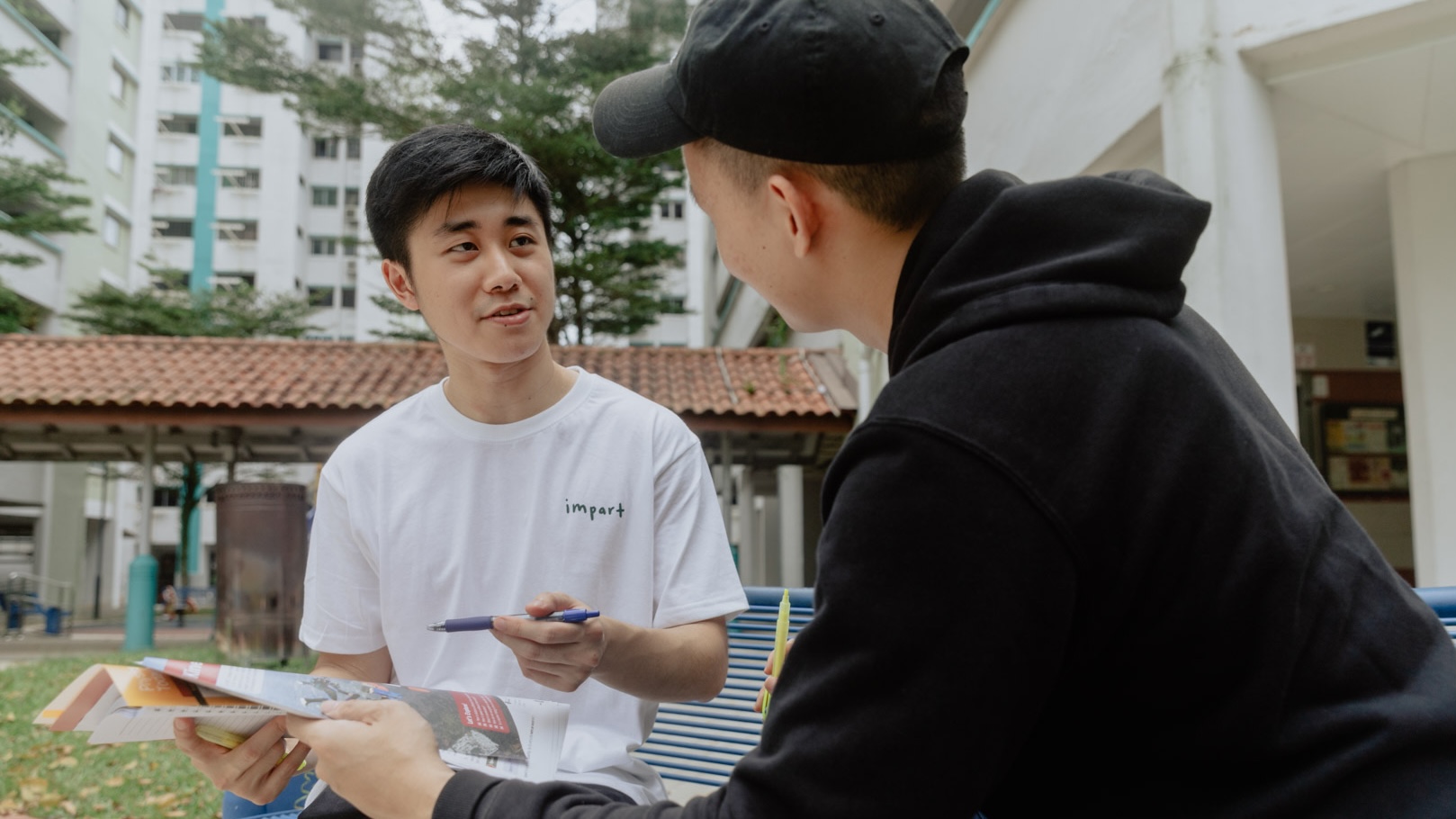
Impart has been working with youths facing significant adversity over the past 5 years. Some of these youths come from high risk backgrounds, where gangs and substance abuse were the norm. Others come from high need backgrounds, where mental health challenges and neglect were the daily struggle. Over time, many of these youths have found their way back into stability and onward unto personal development. A question remains: Can these youths who were once the recipients of social services play a part in fixing the sector’s problems?
Impart believes that more pathways forward are possible. But it has to be paved by pioneers. These youths possess a wealth of lived experiences. Sadly, formal developmental tracks for accreditation often involve obtaining a diploma or university degree. Many of these youths simply do not have the time and means to pursue such 3-7 year options. Some of them have already gone through formal education in a different track, not thinking that they could be a part of the social service sector. And so they often pursue jobs to pay the bills – sustenance, rather than development and contribution, becomes their pathway forward.
‘Paving Pathways’ is Impart’s response to this challenge. Without diminishing the value of a professional diploma or degree, we want to pilot developing such youths through a 1 year-program. They will receive training and exposure to Impart’s model of community work, which spans theoretical and practical components to youth engagement, mental health care, and systems thinking. This experience will also set them up to pursue further education, which necessitates relevant work experience for youths who do not possess traditional academic qualifications. Through this process, you will join us in paving new pathways for youths to build on the strengths of their past experiences, and for the sector to experience growth from a new perspective.
Case Study:
Z, 24 years old, grew up in an environment with generational cycles of at-risk behaviour. He participated in this environment throughout his formative teenage years, which eventually landed him in a rehabilitative youth institution at the age of 18 where he was classified as a high-risk youth. Thankfully, his experiences in the institution catalysed his transformation. The active support of his caseworker, which continued even after he had left the institution, spurred him on to complete his studies in Retail Services at ITE with a GPA of 3.4/4. He proceeded to seek employment as a delivery attendant, before enlisting for National Service (NS). Z reflected on his past experiences during NS, and realised that he wanted to help youths break out of generational and circumstantial cycles of adversity. However, existing pathways towards such careers will require a minimum of 3 years of further studies before Z has a chance at an entry level job. This is a luxury that Z, who also helps to support his divorcee mother and younger sibling, cannot afford. He reached out to his former caseworker over the past 2 months, who is currently working at Impart, and will be a direct beneficiary of ‘Paving Pathways.’
Fund-usage:
Impart will cover the costs related to the selected youth’s training, supervision, and deployment. In response, we hope you will partner us by covering the youth’s training stipend and basic benefits. Most of them are above the age of 21 and shoulder familial responsibilities. A stipend with basic benefits will empower them to concentrate on their learning and development.
We have their engagement across 3 tracks.
‘Ad-hoc’ engagements are for youths who are not ready for full-time engagement, but demonstrate potential in learning more. They will be involved in part-time deployments to develop interest.
‘Interns’ are youths who have been deemed ready for full-time engagement, with minor reservations about their aptitude and/or attitude for maximising their potential. Youths in this role will be evaluated on a 3-6 month timeline before consideration for the next tier, ‘Trainees’.
‘Trainees’ will participate in a 12 month developmental program to acquire requisite knowledge and develop their skills, so as to supplement their lived experiences with professionalised expertise.
100% of your donations to Ray of Hope go to people in need. We do not take a cut from the funds. We even cover 3rd party credit card charges that other crowdfunding platforms deduct from your donation for campaigns.
100% of all campaigns are also fully verified, so you know your funds goes to real people with real needs.
We take donor accountability very seriously – with yearly audited accounts and strong governance in place to ensure that your donations is properly channeled to the beneficiaries.
Ray of Hope is a registered charity and a member of the National Council of Social Services.
Read Less
No updates on this campaign yet
Updates
No updates on this campaign yet
Angie Ng donated
S$300
Thank you for the great efforts to lead the youth-at-risks back to the right path and in turn help enable them to contribute back to society! Wishing Impact every success in this journey!
3 years ago
Donors (2)
100% of your donation goes to Impart: Paving Pathways Give hope now!
This is the description this is the descriptionthi...
0%
S$400 /S$500,000
You can help by sharing
We verify every individual beneficiary
Ray of Hope has a stringent 3-step verification process to
verify each beneficiary’s identity and ensure their need is genuine.
3 Step
Verification
1. Conduct Home Visits
Family $ financial history
Social assistance (if any)
Needs
2. Check Documents
Payslips
Bank & CPF statements
Medical and other records
3. Contact Stakeholders
Due diligence check with Ministry of Social and Family
Development (MSF)
Other non-profit helping beneficiary
Donation Back
Guarantee
Our campaigns undergo a stringent verification process. In the unlikely event of
any
discrepancy, rest assured that your donation will be fully refunded.




 Verified by Ray of Hope
 Donation Back Guarantee